
.svg)

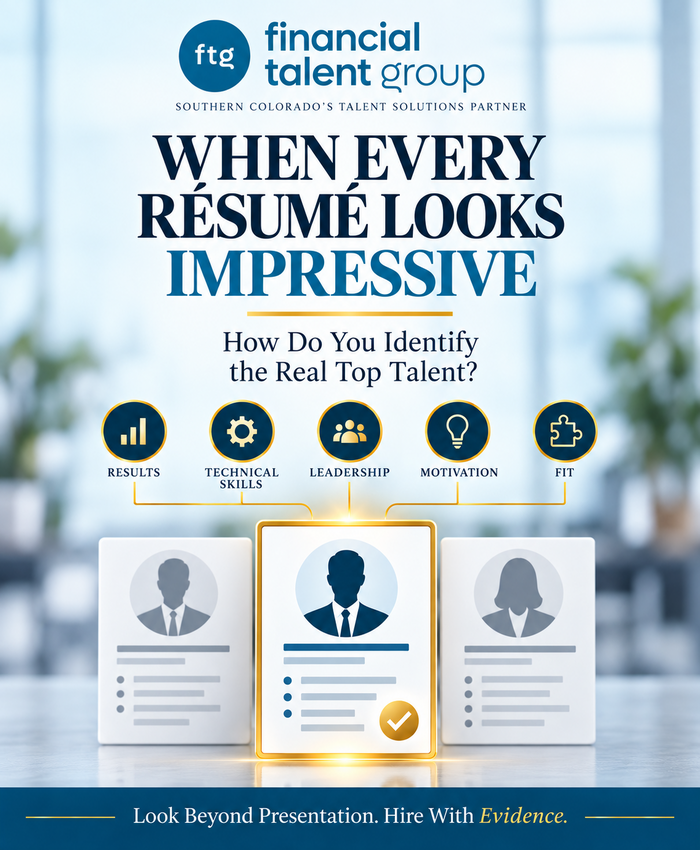

Artificial intelligence has made it easier than ever for job seekers to improve a résumé, prepare for an interview and present their experience in a polished, compelling way.
That is not inherently a problem. Used responsibly, AI can help qualified professionals communicate their experience more clearly. However, it can also make it more difficult for employers to distinguish between a well-presented candidate and someone who has genuinely demonstrated the skills, judgment and experience required for the position.
According to a recent Gallup poll, 65% of surveyed business leaders report hiring challenges related to AI-generated applications. Employers are receiving more applications, yet many are finding it harder, not easier, to identify professionals who are prepared to perform the work.
The answer is not to dismiss AI-assisted applications. It is to strengthen the hiring process around them.
Look Beyond Presentation and Evaluate Evidence
A polished résumé can open the door, but it should not make the hiring decision. Employers need a consistent process for evaluating the evidence behind each candidate’s claims.
That begins before the first résumé is reviewed.
1. Define What the Person Must Accomplish
Many searches begin with a list of responsibilities, years of experience and preferred qualifications. Those details matter, but they do not fully define success.
Before recruiting begins, identify the outcomes the individual must deliver during the first six to twelve months.
For example:
- Shorten or stabilize the month-end close
- Improve financial reporting accuracy
- Prepare the organization for an audit
- Build or develop a team
- Complete an ERP implementation
- Strengthen internal controls
- Improve recruiting or employee-retention results
- Establish greater accountability within a department
These outcomes give interviewers a more meaningful standard for evaluating candidates. The question becomes less about whether someone checks every box and more about whether they have successfully addressed comparable challenges.
2. Ask for Specific Examples, Scope and Results
Broad questions often produce polished but general answers. Evidence-based questions require candidates to explain what they personally did.
Instead of asking, “Do you have experience with month-end close?” consider asking:
- What was your specific responsibility in the close process?
- How many entities, accounts or business units were involved?
- What systems did you use?
- What problems did you encounter?
- What decisions did you personally own?
- How did you measure the result?
- What would your manager say was your greatest contribution?
Listen for clarity, context and ownership. Strong candidates should be able to explain not only what the team accomplished, but also the role they personally played.
3. Use a Structured Interview Scorecard
Unstructured interviews can easily become influenced by personality, presentation style or conversational chemistry. Those qualities may matter, but they should not replace evidence of ability.
Create a scorecard based on the most important requirements and outcomes of the position. Each interviewer should evaluate the same core areas, such as:
- Technical knowledge
- Relevant scope and complexity
- Problem-solving and judgment
- Communication
- Leadership or collaboration
- Adaptability
- Motivation for the opportunity
A shared scorecard helps the interview team compare candidates consistently and explain why one person is better aligned than another.
4. Validate Technical Claims Consistently
Technical assessment does not need to feel like an interrogation. It should resemble the decisions and challenges the professional will encounter in the role.
Depending on the position, employers might use:
- A relevant business scenario
- A work-sample discussion
- A technical case study
- Follow-up questions about systems and processes
- A presentation or explanation of a past project
- Questions about how the candidate would approach the first 90 days
Every candidate should be evaluated using the same standard. This improves fairness while making it more difficult for polished but unsupported claims to carry the interview.
5. Make Reference Checks Role-Specific
A generic reference check may confirm employment and determine whether someone is eligible for rehire. A strong reference check helps validate the candidate’s likely success in the specific position.
Whenever possible, speak with former supervisors and ask questions tied directly to the role:
- What level of responsibility did the candidate independently own?
- How did they respond when priorities changed?
- What were their strongest technical capabilities?
- How did they communicate with leadership, clients or team members?
- How did they respond to feedback?
- What type of environment brought out their best performance?
- Would you hire this person again for a similar position?
References should complement the interview process by confirming patterns, not introduce an entirely new evaluation standard at the end.
6. Continue Qualifying the Candidate Throughout the Process
Technical ability is only one part of a successful hire. Employers should also understand whether the candidate is genuinely interested and positioned to accept the opportunity.
Throughout the process, revisit:
- Career motivations
- Compensation expectations
- Work-model preferences
- Other active interviews
- Concerns about the position or organization
- Notice-period requirements
- Potential counteroffer risk
- Family, travel or scheduling considerations
- What the candidate needs to confidently accept
This ongoing “trial close” helps uncover issues before the offer stage, when surprises become more expensive and disruptive.
7. Keep Experienced Recruiters Involved in the Human Assessment
Technology can help employers organize applications, identify relevant experience and improve efficiency. It cannot fully assess career motivations, credibility, judgment, communication style or the concerns that may keep a candidate from accepting and remaining in a position.
Experienced recruiters add value by asking follow-up questions, recognizing inconsistencies, understanding the talent market and developing the trust candidates need to speak candidly.
At Financial Talent Group, our evaluation extends beyond the résumé. We assess technical alignment, relevant accomplishments, career motivations, leadership and working style, compensation expectations, work-model alignment and the factors that could affect acceptance.
AI may help candidates improve how their experience is presented. Our role is to help employers understand the experience behind that presentation.
Better Hiring Requires Better Evidence
The goal is not to make the hiring process longer or more difficult. It is to make each step more intentional.
When employers define success clearly, ask evidence-based questions, evaluate candidates consistently and maintain open communication throughout the process, they can move beyond polished presentation and identify the professionals most capable of delivering meaningful results.
FTG helps employers look beyond the résumé to identify, evaluate and secure the talent their organizations need. Let’s build a hiring process designed for greater clarity, confidence and long-term success.